About us

We make e-drums more accessible

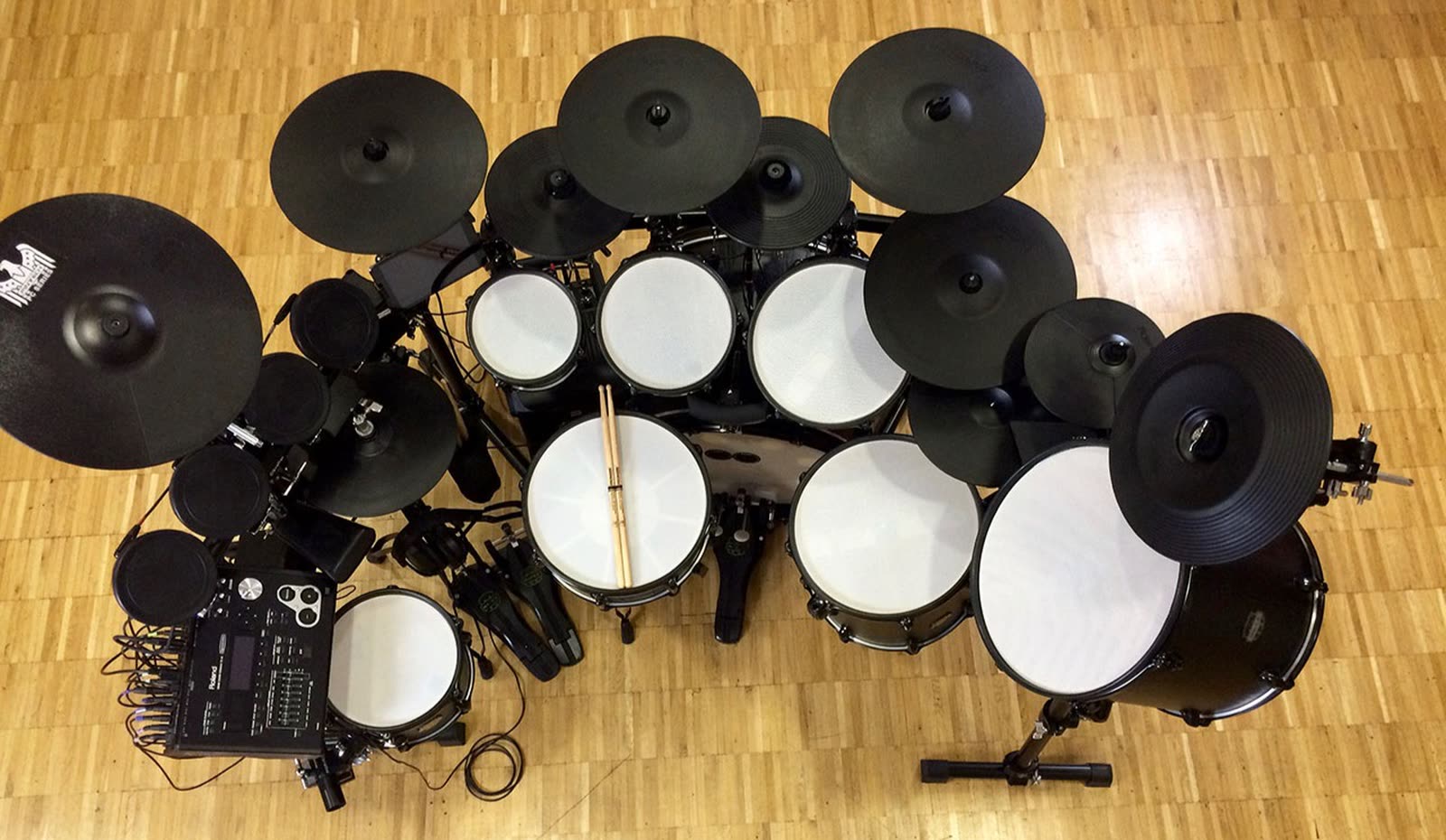
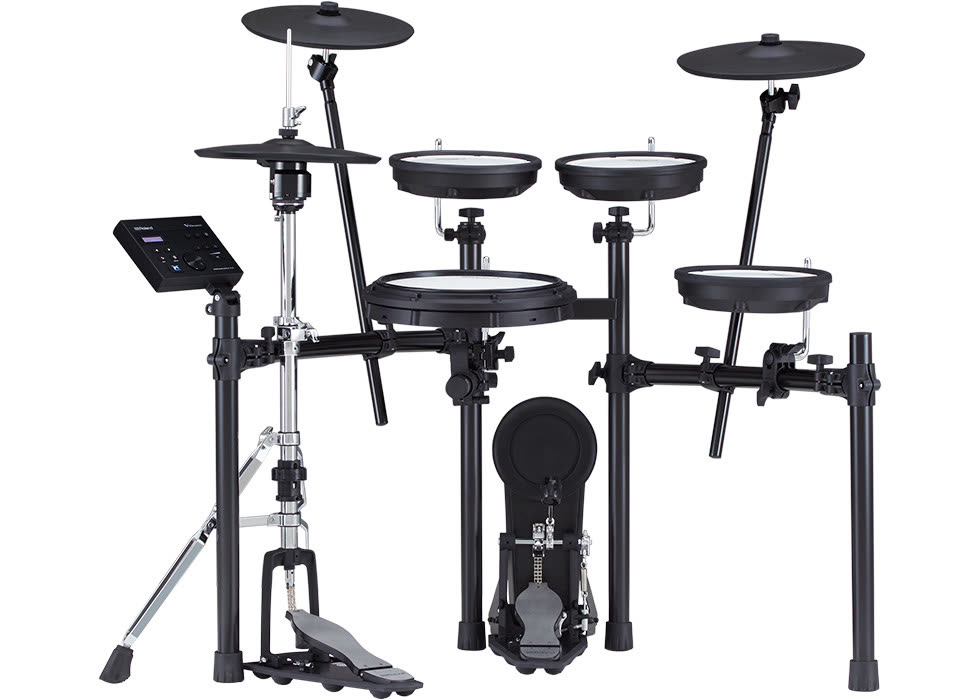
Our goal has always been to make electronic drums sound exceptionally good at an affordable price.

There are numerous electronic drum kits on the market, but many rely on outdated technology.

How is it that a budget smartphone costs a couple of hundred dollars while carrying gigabytes of RAM, multi-core processors, ample storage, internet connectivity and a large colour display — while electronic drum modules often don't even have 1 GB of RAM, offer a small monochrome display, and cost thousands?

A drum module's small monochrome display

Our story

  1. 2011

    DrumPi began with Paolo, who simply couldn't afford a proper electronic kit. He'd been a software engineer for years when he had the idea that a smartphone could serve as the sound engine for a drum module.

  2. The computational power was there, but the latency wasn't. Even iOS devices with Core Audio couldn't get below 6.5 ms once buffer size, the driver's ring buffer and USB polling were accounted for. The result was decent, but no better than any reasonable computer could manage.

  3. 2015

    Paolo abandoned the smartphone and started building prototypes on a Raspberry Pi 3, working at a much lower level. Latency dropped from 6.5 ms to 2.5 ms — but the code sat so low that developing it further became painful. It was a Ferrari with no seats and no steering wheel.

  4. 2019

    After a few years away sharpening his modern C++, Paolo came back to the project with help from his friend Max. Paolo rewrote the audio engine; Max took on UI and UX. They swapped the Linux kernel for preemptive-rt, profiled execution times, and isolated one core of the quad-core CPU to run nothing but the real-time audio thread.

  5. In roughly ten months the audio engine had become a DAW in its own right: a 64-channel mixer, effects, MIDI, multi-layered and multi-velocity samples, a transient shaper, and multitrack audio and MIDI recording.

  6. The core was done — but how did it feel to play? Paolo isn't a professional drummer and couldn't judge it. So they brought in Valerio and spent months tuning the response and feel. Making Valerio happy was no easy feat; he had a keen ear for authenticity. Given the results, it was worth every bit of the effort.
How it's built

  • Software

    Written from scratch in modern C++

    Built on contemporary frameworks like JUCE and React, and compatible with a wide range of hardware. It takes advantage of modern multi-core CPUs and plentiful RAM, which is what lets us sample so extensively — capturing every nuance of an acoustic kit, round robins included. The internal 64-channel mixer lets you apply a chain of effects to each microphone used during sampling, exactly as you would in a DAW.

  • Hardware

    Deliberately hardware-agnostic

    That lets us use powerful but cost-effective hardware and keep the product accessible. It also gives us a proper user interface over Wi-Fi from any phone or desktop — essential to keeping the price down. A version with an integrated large colour display is planned shortly after this release.

  • Sampling

    Over 100 velocities per drum

    Every drum can be sampled at more than a hundred velocities, and every sample recorded with as many microphones as you like — so you can adjust and process each microphone independently through the integrated mixer, in real time.

  • System

    Linux with a modified kernel

    An operating system underneath lets us build audio products quickly and keep them stable. Web technologies for the interface speed that up further, and make otherwise awkward features possible: an interactive score reader for exercises and songs, downloadable didactic material, and video recording of your playing to share with a teacher or online.

Meet the team

  • Paolo Simonazzi

    Paolo Simonazzi

    Hardware programmer

    Software engineer for as long as I can remember. Started with GW-BASIC in 1994, not because I enjoyed it but because that's what my 286 could do — then I did enjoy it. Went from software to firmware and on to electronics, basically trying to frustrate myself as much as possible. Bachelor's in computer engineering, to complete the struggle.

  • Massimo Melina

    Massimo Melina

    Keyboard toucher

    I fell in love with programming at 14, in 1992. Around the same time I got my first musical keyboard; those days were all programming and playing keyboard, and thirty years later that hasn't changed. Bachelor's in computer science, because why not.

Privacy

Analytics settings

Google Analytics measures how visitors use the site, including page views and download clicks. If allowed, Google receives usage and device information and sets analytics cookies. Advertising features stay disabled, and Analytics never loads before your choice.

Current choice: not selected